Diwan · The First Chapter
Khorasan
خراسان
The ancient land that gave the world its greatest poets. This is not a product page. It is the story behind what we are making and why it matters.
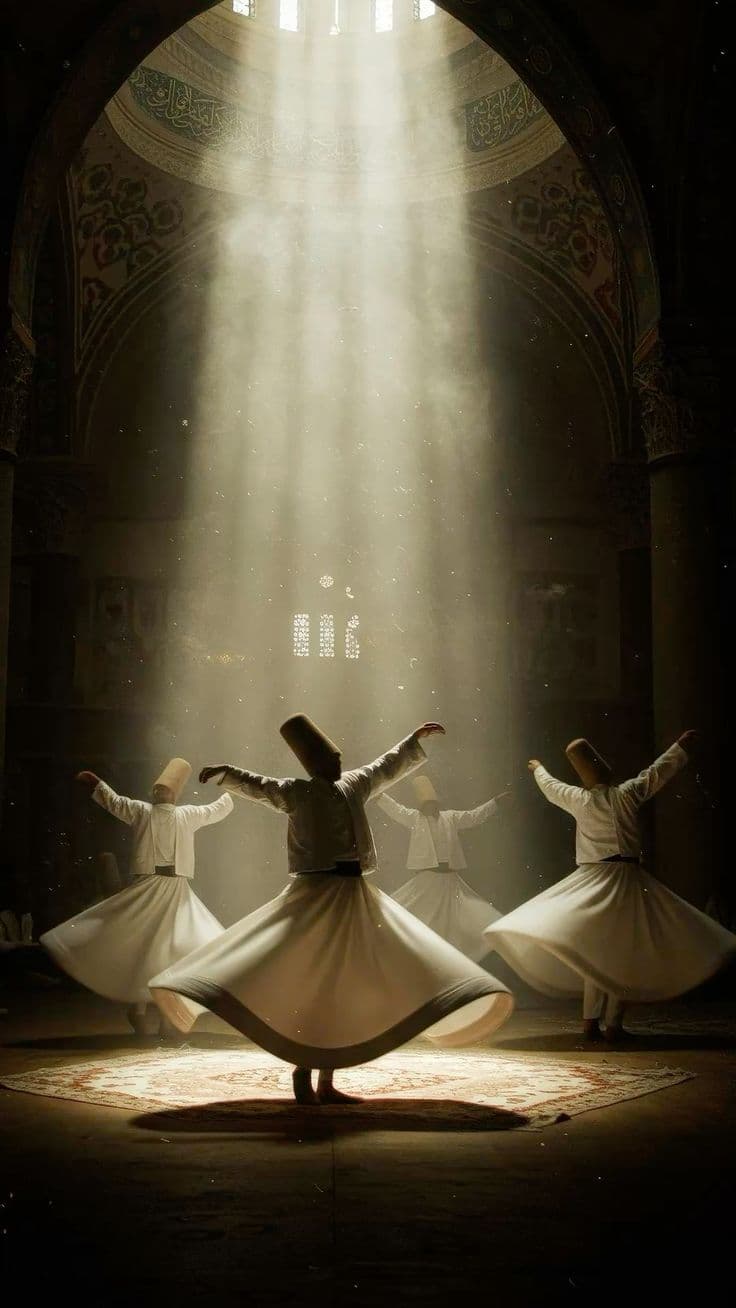
The Founding Verse
بشنو از نی چون حکایت میکند
از جداییها شکایت میکند
“Listen to the reed, how it tells its tale —
of separations, it makes its complaint.”
Rumi · Opening verse of the Masnavi · 13th century, Khorasan
This verse has been passed down for eight hundred years. It opens with a reed cut from the reed bed — separated from its origin, crying that longing into music. Every diaspora person who has ever felt the ache of two worlds will recognize what Rumi was describing.
The Land
The Land
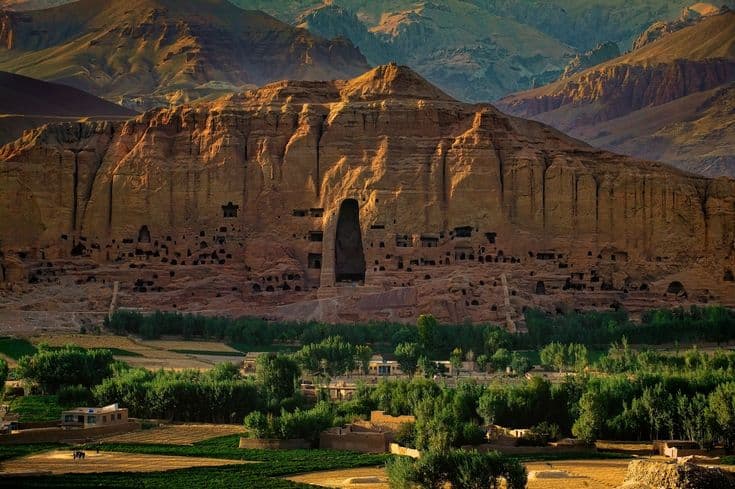
Bamiyan Valley · Afghanistan · Heart of ancient Khorasan
A region that
shaped civilization.
Khorasan — خراسان — translates roughly as “the land where the sun rises from.” It was not a country in the modern sense. It was a cultural region covering what is now northeastern Iran, Afghanistan, Tajikistan, and parts of Uzbekistan and Turkmenistan. For over a thousand years, it was one of the most intellectually and artistically productive places on earth.
The Silk Road passed through it. Persian became the language of its courts, its poetry, its science, and its philosophy. The cities of Nishapur, Balkh, Merv, and Herat were not provincial outposts — they were centers of the medieval world, producing mathematicians, astronomers, poets, and architects whose work shaped everything that came after them.
Al-Biruni, one of the greatest scholars in human history, was from Khorasan. Ibn Sina — Avicenna — whose medical texts were used in European universities for five centuries, was from Khorasan. Ferdowsi wrote the Shahnameh there. Rumi was born there. The civilization that produced them is the inheritance that Collection 01 draws from.
The Poets
The Poets
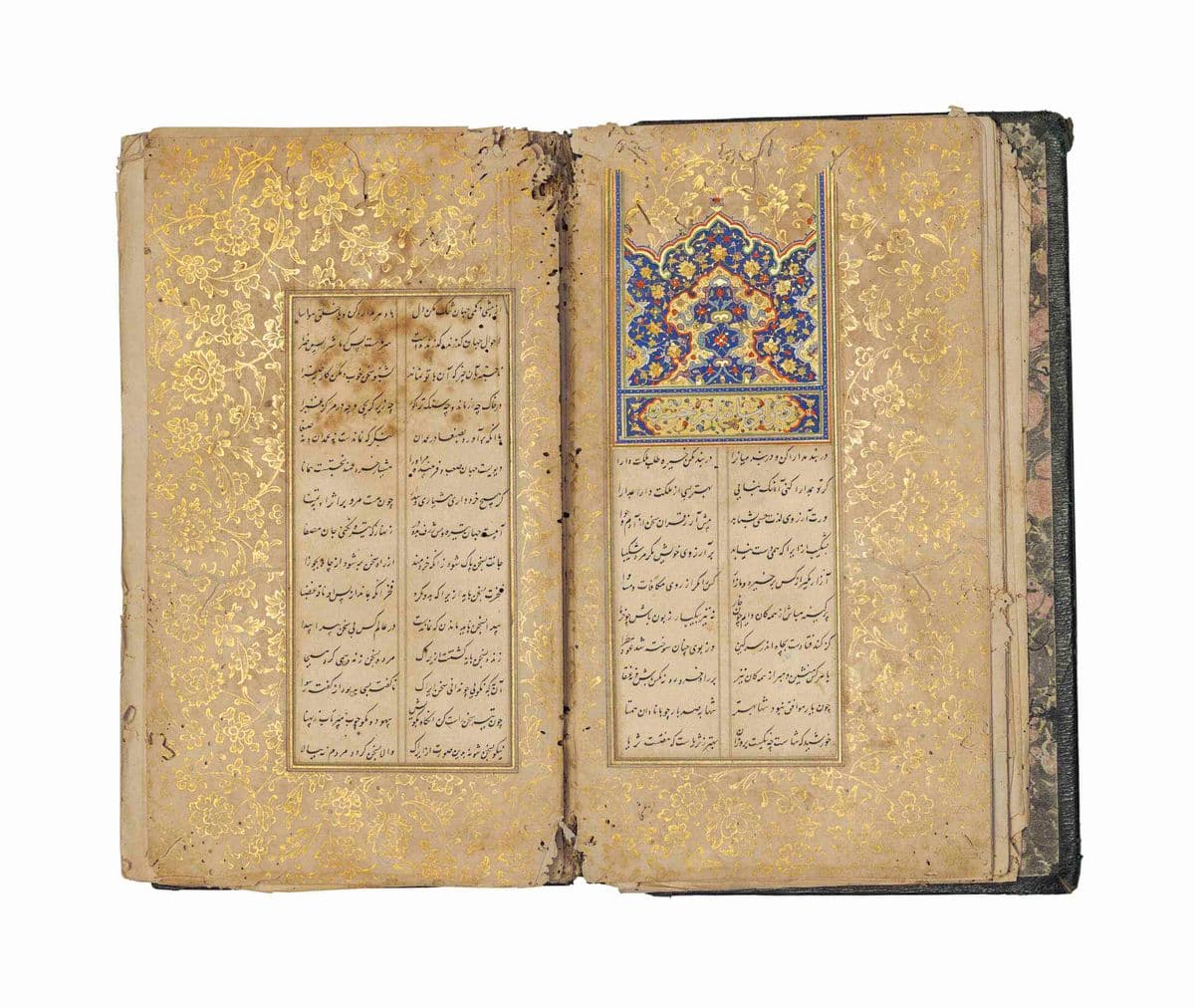
Diwan of Nasir Khusraw · 11th century manuscript
The voices that
never went silent.
Jalal al-Din Rumi
1207 – 1273 · Born in Balkh, Khorasan
رومی
Rumi was thirty-seven years old, a respected scholar and teacher in the city of Konya, when a wandering dervish named Shams of Tabriz walked into his life and broke him open. In the years of grief and ecstasy that followed, he dictated the Masnavi — 25,000 verses of poetry that are still the most read works of poetry in the world, eight centuries later. He wrote in Persian. He was from what is now Afghanistan. The opening verse of the Masnavi — the one on our clothing — is about a reed cut from its reed bed, crying for its origin. It has never stopped being relevant.
Abu'l-Qasem Ferdowsi
940 – 1020 · From Tus, Khorasan (present-day Iran)
فردوسی
Ferdowsi spent thirty years writing the Shahnameh — the Book of Kings — a 60,000-verse epic that preserved the entire mythology and history of Persian civilization at a moment when Arabic was threatening to erase it. He was reportedly paid very little for this act of cultural rescue. The Shahnameh is the reason Persian survived as a living language. Ferdowsi is the reason Iranian, Afghan, and Tajik cultures still share a literary inheritance. He is one of the most consequential writers in human history and he remains largely unknown outside his own civilization.
Sanai of Ghazni
1080 – 1131 · From Ghazni, Khorasan (present-day Afghanistan)
سنایی
Sanai was the first great Sufi poet — the man who showed that Persian poetry could carry spiritual meaning, not just courtly praise. Rumi himself said that he was the child of Sanai's thought. He wrote from Ghazni, the same city from which the Ghaznavid empire spread Persian culture across Central Asia and into the Indian subcontinent. When you hear the word "ghazal" — the lyric poem form that became the dominant poetic form from Persia to India — you are hearing the echo of a tradition that Sanai helped define.
Nasir Khusraw
1004 – 1088 · Born in Balkh, Khorasan (present-day Afghanistan)
ناصر خسرو
Nasir Khusraw was a philosopher, poet, and Ismaili missionary who walked 19,000 kilometers across the Islamic world, from Khorasan to Egypt and back. His travel diary — the Safarnama — is one of the most vivid accounts of the medieval Islamic world ever written. His poetry combines philosophy, ethics, and a fierce intellectual independence. He is claimed by Afghan, Iranian, and Tajik cultures simultaneously. His diwan — his collected poetry — is one of the objects this brand takes its name from.
The Art
The Art
A visual world built
over ten centuries.
The art that Collection 01 draws from is not decorative. It is a visual philosophy — a tradition of finding the infinite inside the finite, of expressing the divine through geometry, calligraphy, and color.
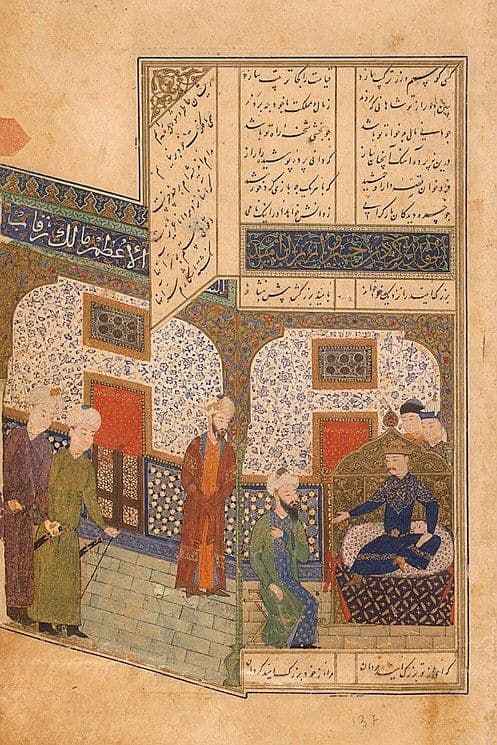
Persian miniature · Timurid school · Herat, 15th century
خط
Calligraphy
In Islamic art tradition, calligraphy is the highest art form. The word of poetry written beautifully is not decoration — it is the art itself. Every piece in Collection 01 carries a verse written by hand.
هندسه
Geometric Pattern
The infinite repeating patterns of Islamic architecture — the tile work of Isfahan, the muqarnas of Herat — are a visual expression of the infinite. They are also some of the most beautiful things human beings have ever made.
نگارگری
The Miniature Tradition
Persian miniature painting reached its peak in the Timurid courts of Herat and Samarkand in the 15th century. These intimate, jewel-like images carried entire narrative worlds inside a page.
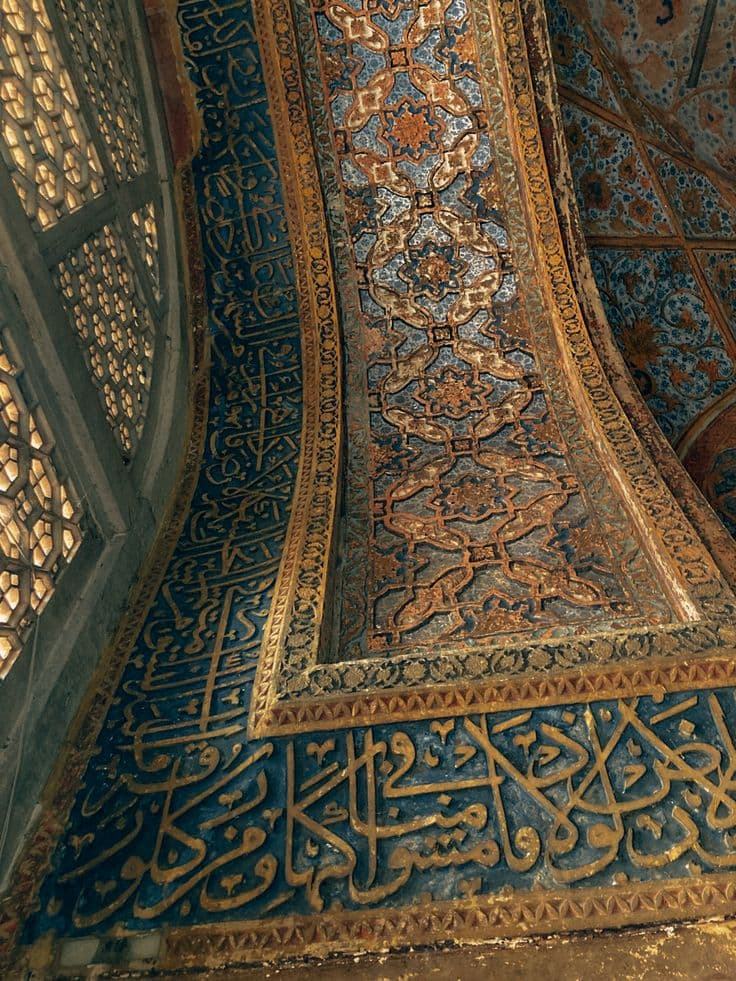
Persian tilework · Isfahan style · Muqarnas ceiling
The Calligraphy
The Calligraphy
Letters that carry
eight centuries of longing.
The verse on Collection 01 is written by hand, with a reed pen, in the tradition of Persian calligraphy. This is not a font. It is not generated by software. It is the physical mark of someone who has carried this verse their whole life and writes it with that weight.
The reed pen — نی — is the instrument Rumi describes in the opening verse. The reed cut from the reed bed, crying its separation as music. There is no better instrument to write those words with than the same reed Rumi was writing about.
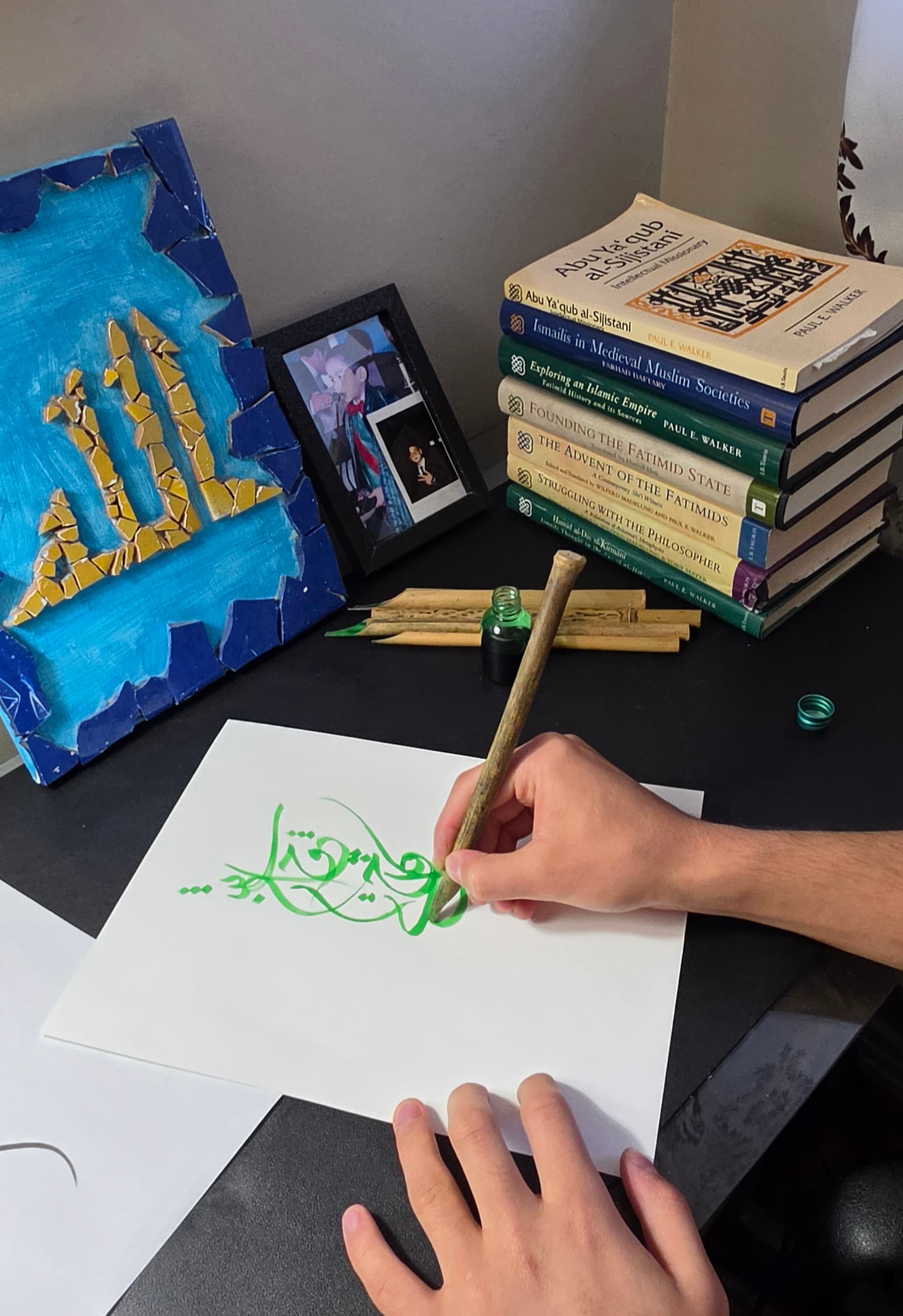
The Verse, Line by Line
بشنو از نی چون حکایت میکند
Bashno az ney chon hekayat mikonad
“Listen to the reed, how it tells its tale”
Rumi opens with a command: listen. Not read. Not observe. Listen. The reed is a living voice, not a text.
از جداییها شکایت میکند
Az jodayi-ha shekayet mikonad
“Of separations, it makes its complaint”
Jodayi — separation — is the central word in Sufi thought. Separation from the divine. From the homeland. From the self before exile. This word carries everything.
دیوان
Join the Gathering
This is what we
are building toward.
Collection 01 — Khorasan is not available yet. When it drops, founding members are first. Join the gathering now.
Founding membership closes at 500.